The very first memory of war still lingers in my head since April 1996.
My siblings and I were supposed to be spending the spring school holidays at our house in South Lebanon, in our village Zibdin, with our grandmother Fatmeh.
April in South Lebanon means almond and cherry blossoms. It means spending the whole day as a kid in the fields, running after white butterflies. Eating Hoummeid or as some call it Hommayda. It means collecting a bouquet of coquelicot to bring to your mom.
At that time, our mother was absent, and that made everything I’m about to reveal even heavier.
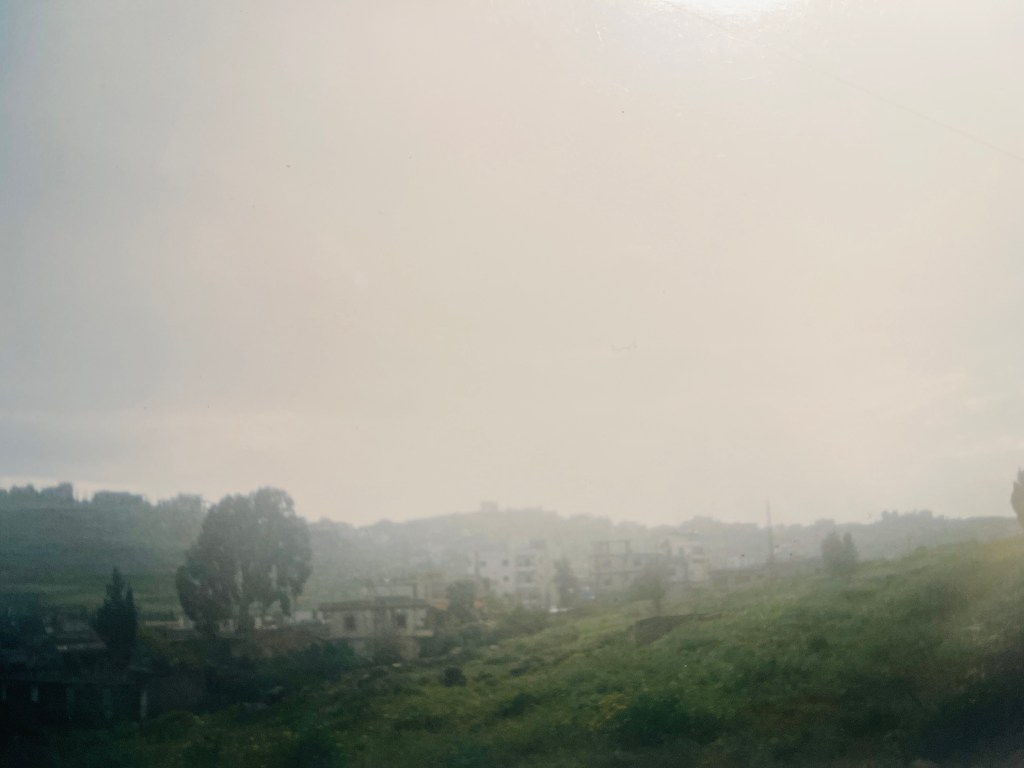
That day was not a typical warm, sunny spring day. From morning, grey clouds hung heavy in the sky. The first moment I felt lost was when my two brothers found and brought back a hedgehog from the field, captured in a plastic bag. That’s when we realized the fighters were in the sky. I can’t forget the deep insecurity I felt on that April morning. By afternoon, the weather had grown colder, and the only choice we had was to stay indoors.
All I remember is the sound of my grandmother’s black-and-white TV running all day. Her telling us to put our hands behind our heads and stay low, close to the floor, each time we heard a strike. I don’t remember how we spent that night. What I do remember is that we were evacuated. The next day at dawn someone drove us for hours. We reached Beirut late in the afternoon.
Looking back, I can’t even imagine how my mother felt. Having all her children-who were supposed to be enjoying a lovely spring holiday-trapped under rocket fire with no way to reach them. That moment when we finally saw her again will never leave my mind.
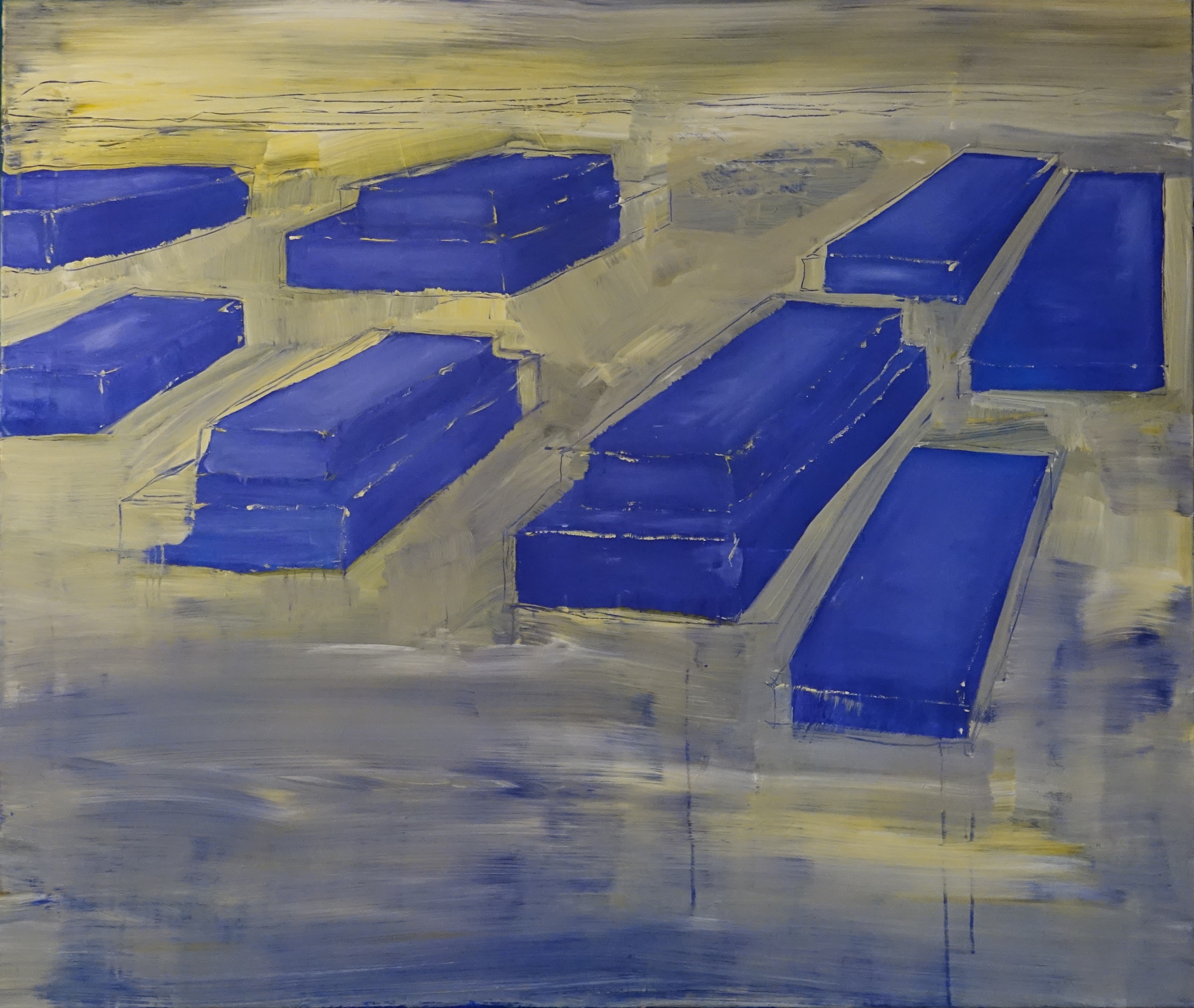
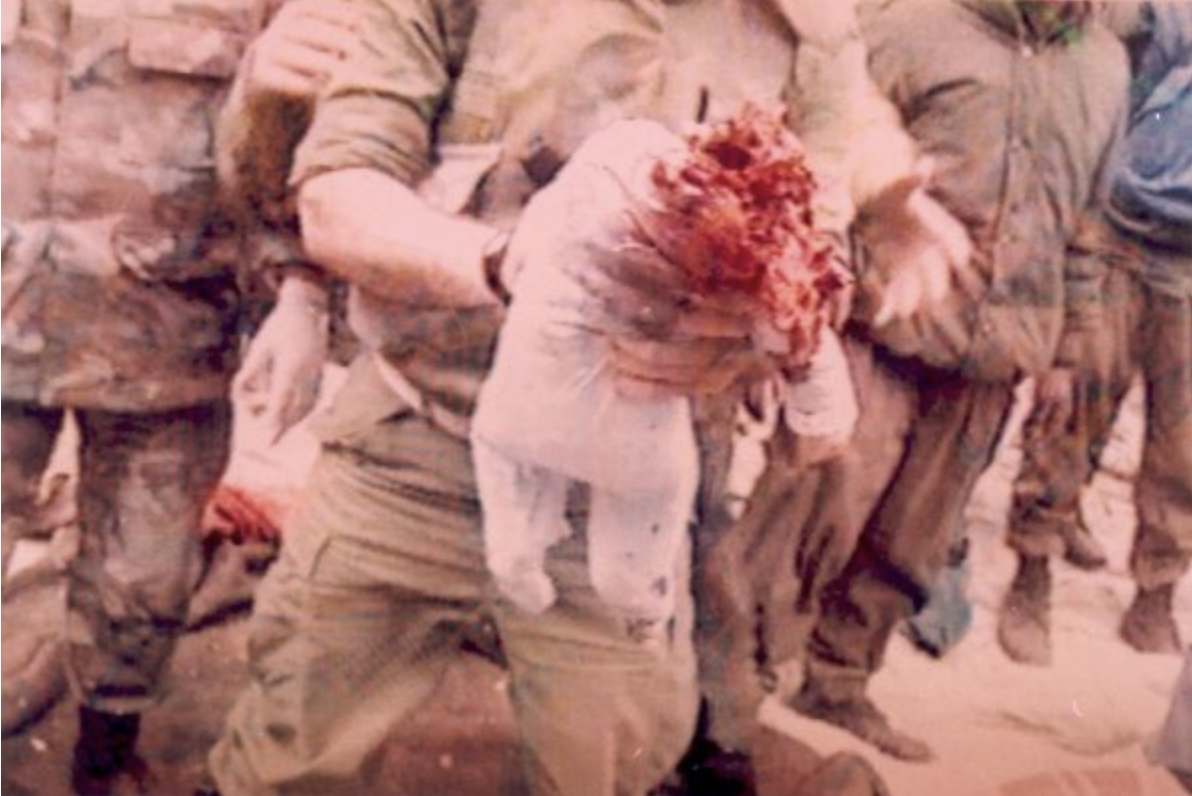
It was already at that age when I understood what the word massacre meant. A few days later, the Qana massacre happened. In 1996, the media showed the images unfiltered, uncensored. That year, the seven-year-old me saw a headless baby on TV. I am still shocked by that scene. I can’t forget the headless baby. I can’t forget the hundreds of coffins carried to be buried. And perhaps, my Archetypes 2 painting series was a tribute to the victims and martyrs of Qana. When my hand started expressing through a brush, I found myself creating a series of gravestones paintings honoring those innocent souls. Since then, I have never been capable of crying when seeing war images on TV.
Munich today.
When I recently heard the name Leopard 2 on the radio, last November 2025, I smirked. The title reminded me of an outfit I had worn in one of my self-portrait photographs.
So what is Leopard 2? It’s the name of Germany’s most advanced military inventions. A tank.
The naive child in me still asks: why? Yet the human I have become, after witnessing the brutality of our species, understands why showing power is sometimes necessary. As the Arabic proverb says, “If you were not to become a wolf, you shall be eaten by wolves.”
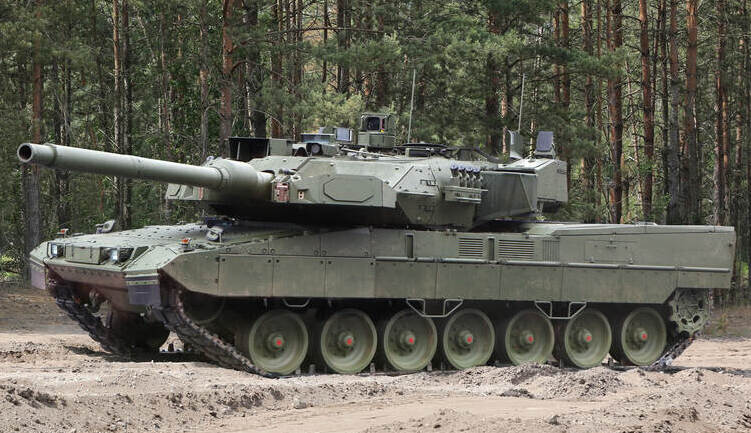
hereAfter eight years devoted entirely to art- exploring different mediums, techniques, dynamics, and working with many personalities-I realized how much both worlds are similar: weaponry and art. They both function and rely on exposure of power, with economic factors determining your position in the market. I have learned to see both sides of it. I see the beauty in art, and I also understand the structures that sustain it. Like any system, it runs on visibility, positioning, and economics. I move within it consciously, aware of its power and its limits.
Now let me tell you about this olive tree.
In late summer, early fall of 2017. A couple of weeks before I left Beirut for good to live in Munich and join art school. My friend Yara and I visited a temporary greenhouse on Mar Mkhayel Street. We bought a lovers’ olive bonsai – two small olive trees wrapped around each other, forming a tiny couple.
We decided to separate them. Yara planted hers in a pot. I brought mine to Munich and gave it to my German neighbour Karin. Eight years later, my olive tree sits safely on Karin’s terrace. In winter, it is moved indoors; in summer, it enjoys a few warm weeks of sun. It is protected, but it is not growing. Yara’s olive tree, that ended up being planted in a village in mount Lebanon, has become a real tree. It hears every bird, every drone, every thunder and airstrike. It stands tall, its roots digging ever deeper into the soil.
The seven-year-old who saw a headless baby would have never imagined writing these lines from the city where world “security ” decisions are made every year.
The real question is not how secure we are, but what we trade in order to feel secure.
Abir Kobeissi 2026
 abirkobeissi.com
.jpg)